
Knife Health
Before you sharpen a knife you care about, understand what it needs.
Knife Health is a simple idea: look at the knife properly before deciding what to do to it. No overly technical diagnostics — just an honest read of condition, use and care needs.
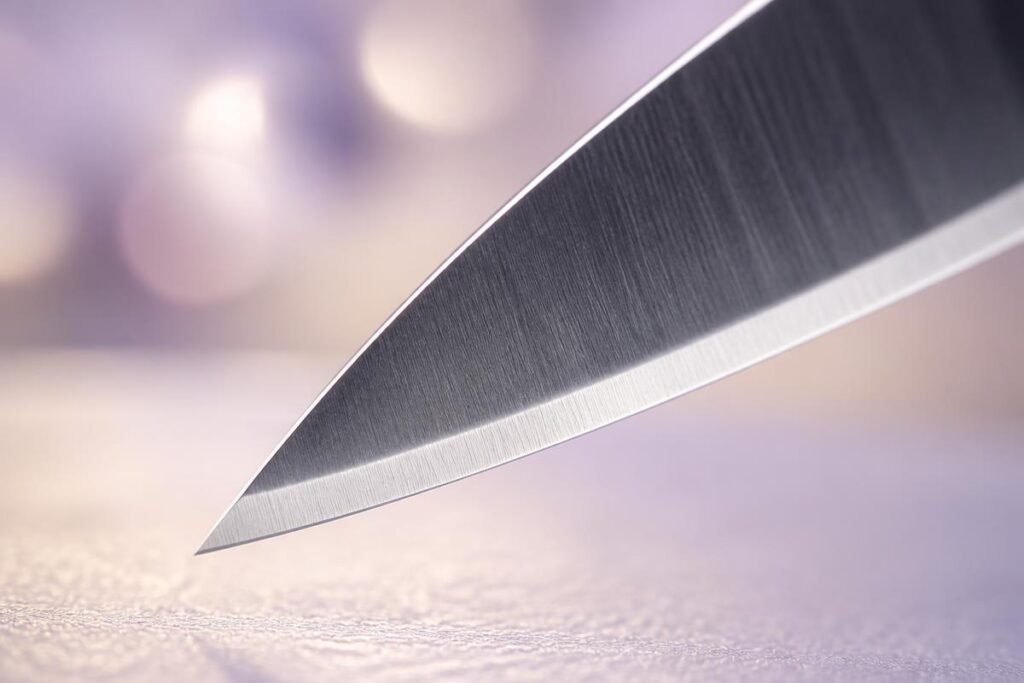
What Knife Health means
A knife has a condition, not just an edge.
Sharpening changes a knife permanently. Understanding its current condition and how the knife is actually used — is what keeps that change in your favour rather than slowly wearing the knife away.
Common signs
What knife owners usually notice first.
(01)
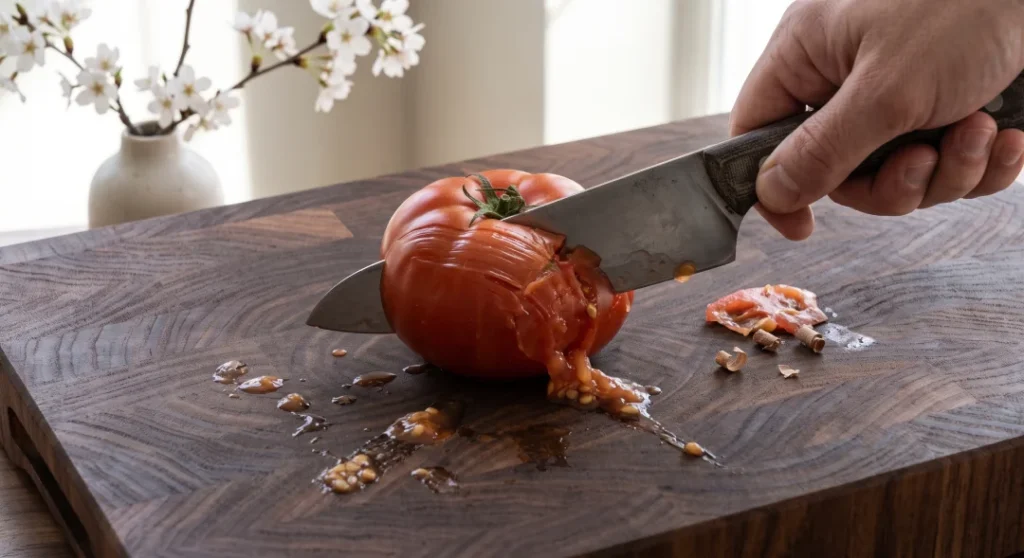
Dullness
It crushes rather than cuts, or slides off skins and tomatoes.
(02)
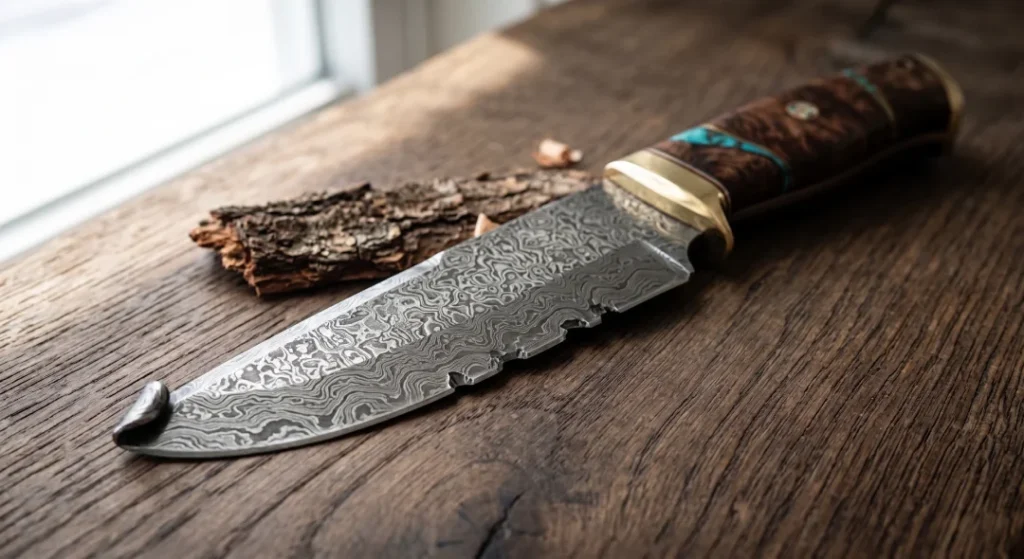
Chips & damage
Visible nicks along the edge, a rolled tip or a bent point.
(03)
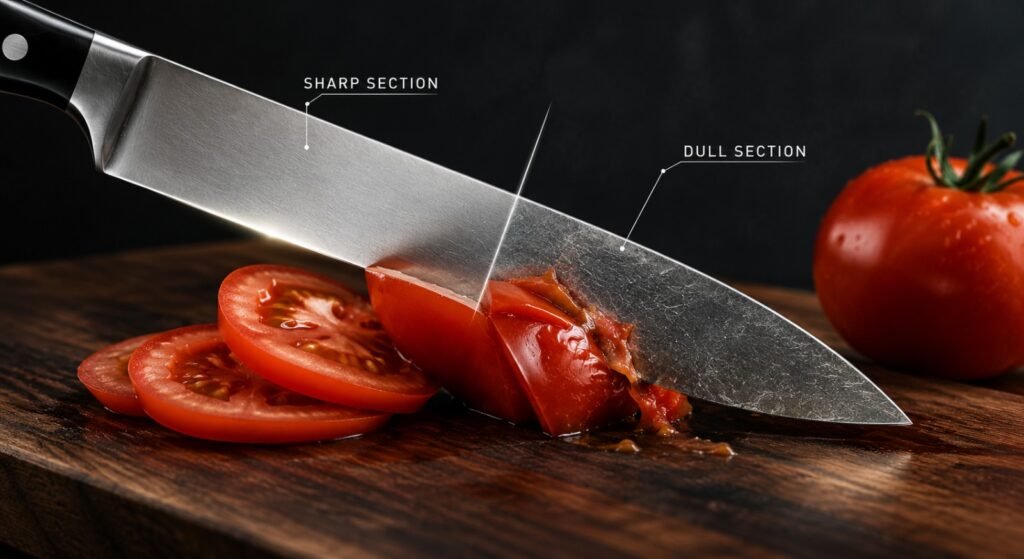
Inconsistent cutting
Sharp in one section of the blade, dull in another.
(04)
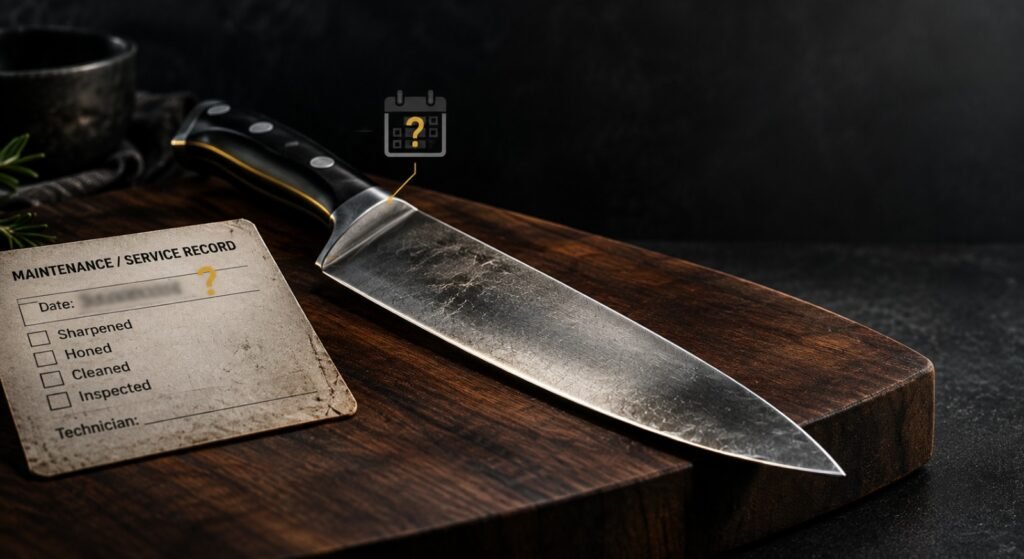
Maintenance uncertainty
You aren’t sure when it was last properly serviced.
THE FIRST-SERVICE EXPERIENCE
The assessment process
(01)
Visual & tactile check
(02)
Edge geometry
Checking the existing bevel angle and whether it’s consistent along the blade.
(03)
Steel condition
(04)
Usage & care conversation
A quick conversation about how the knife is used and cared for day to day.
THE KNIFE HEALTH REPORT
What you actually receive.
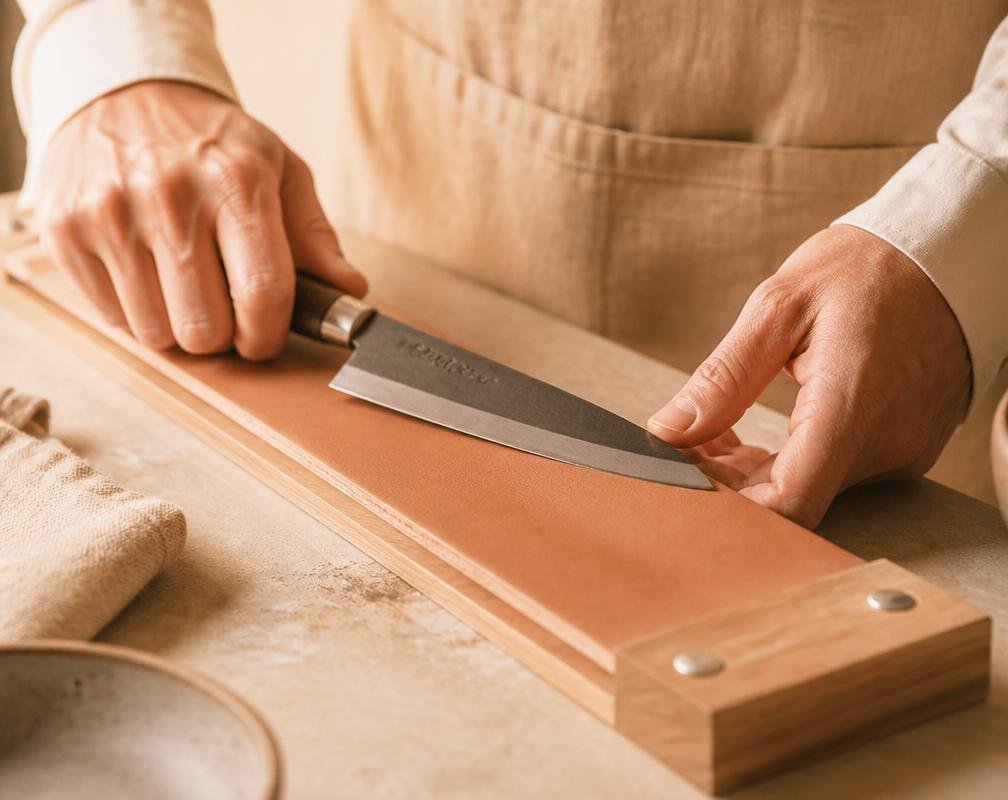
What we found when we examined the edge, steel and geometry.
Exactly what was done to the knife, and why that approach was chosen.
Anything worth knowing — early wear, a stress point, a habit worth adjusting.
Simple, specific steps to help the edge and steel hold up between visits.
A realistic sense of when the knife should be looked at again, where relevant.
FAQ
Questions about Knife Health.
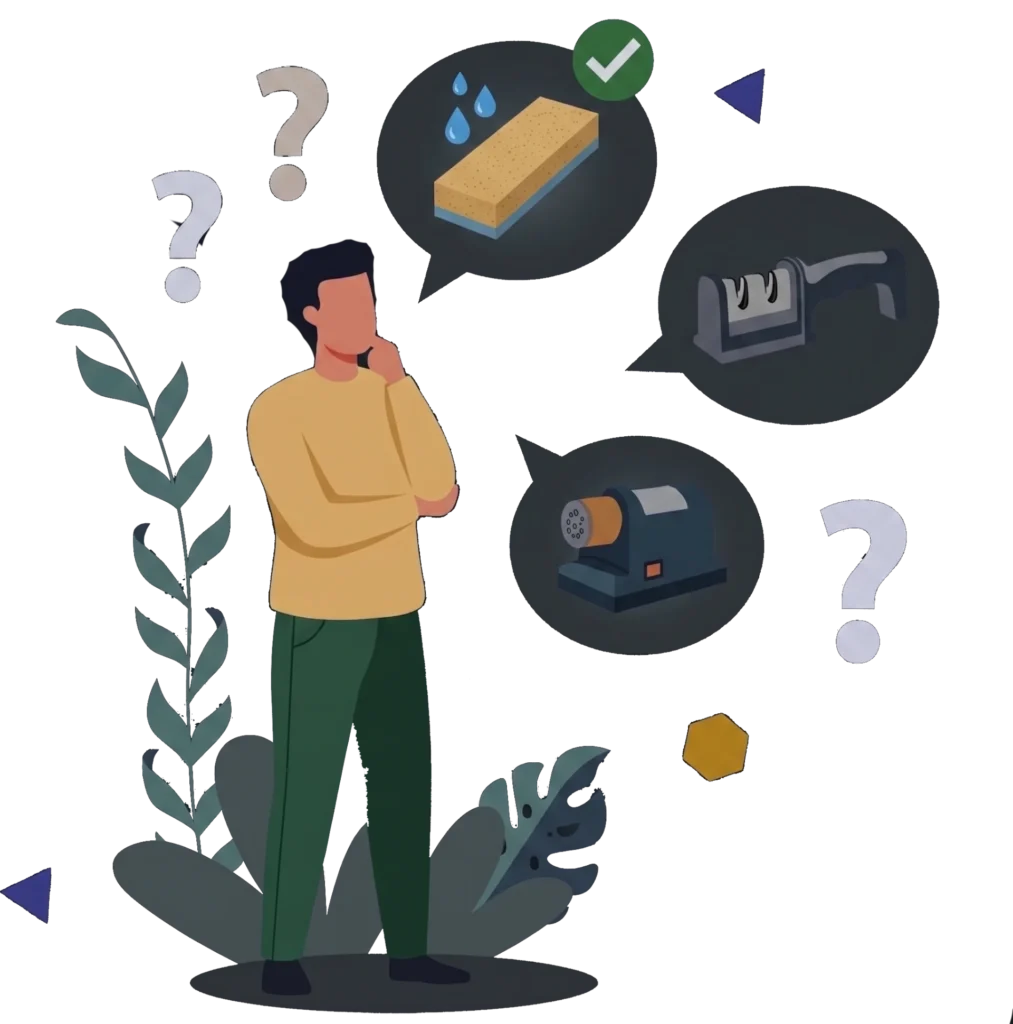
Can you assess the condition of my knives and recommend a sharpening schedule?
Yes, experts evaluate the condition of your knives and provide personalized recommendations on the ideal sharpening frequency for each knife based on its usage and current state.
Are there any signs that indicate my knives need sharpening?
How can I know if my knife blade damage can be repaired?
You can bring your knife in for an evaluation of the damage. The experts will provide an assessment and recommend potential repair solutions, if possible.
What type of blade repairs can you handle?
What should I do if my knife is damaged beyond repair?
If a knife is damaged beyond repair, options for knife replacement will be discussed, or reputable knife brands and retailers will be recommended.
Will sharpening my Japanese knife affect its hardness or delicate craftsmanship?
No, the sharpening process is specifically designed to maintain the hardness and delicate craftsmanship of Japanese knives, preserving their integrity and functionality.
Can you restore the original factory bevels and edge geometry of my chef knives?
Can you provide recommendations on knife maintenance between sharpening sessions?
Yes, guidance is offered on proper knife handling, proper storage, cleaning, and honing techniques. These tips help extend the time between sharpening sessions, maintain the knife’s longevity, and minimize the risk of severe damage.
Ready when you are
Have a knife you care about?
Tell us about the knife and the concern. We only ask for what we need to begin the conversation.